Foster + Partners is one of the world's most celebrated architecture firms, with 1,500 people across 13 studios on every continent. Their work is defined by precision, craft, and the seamless relationship between form and function. They needed a digital space that worked the same way: a central platform connecting their entire global workforce, built to feel as considered as the buildings they design.
Year
2018-2020
Industry
Professional Services
Technology
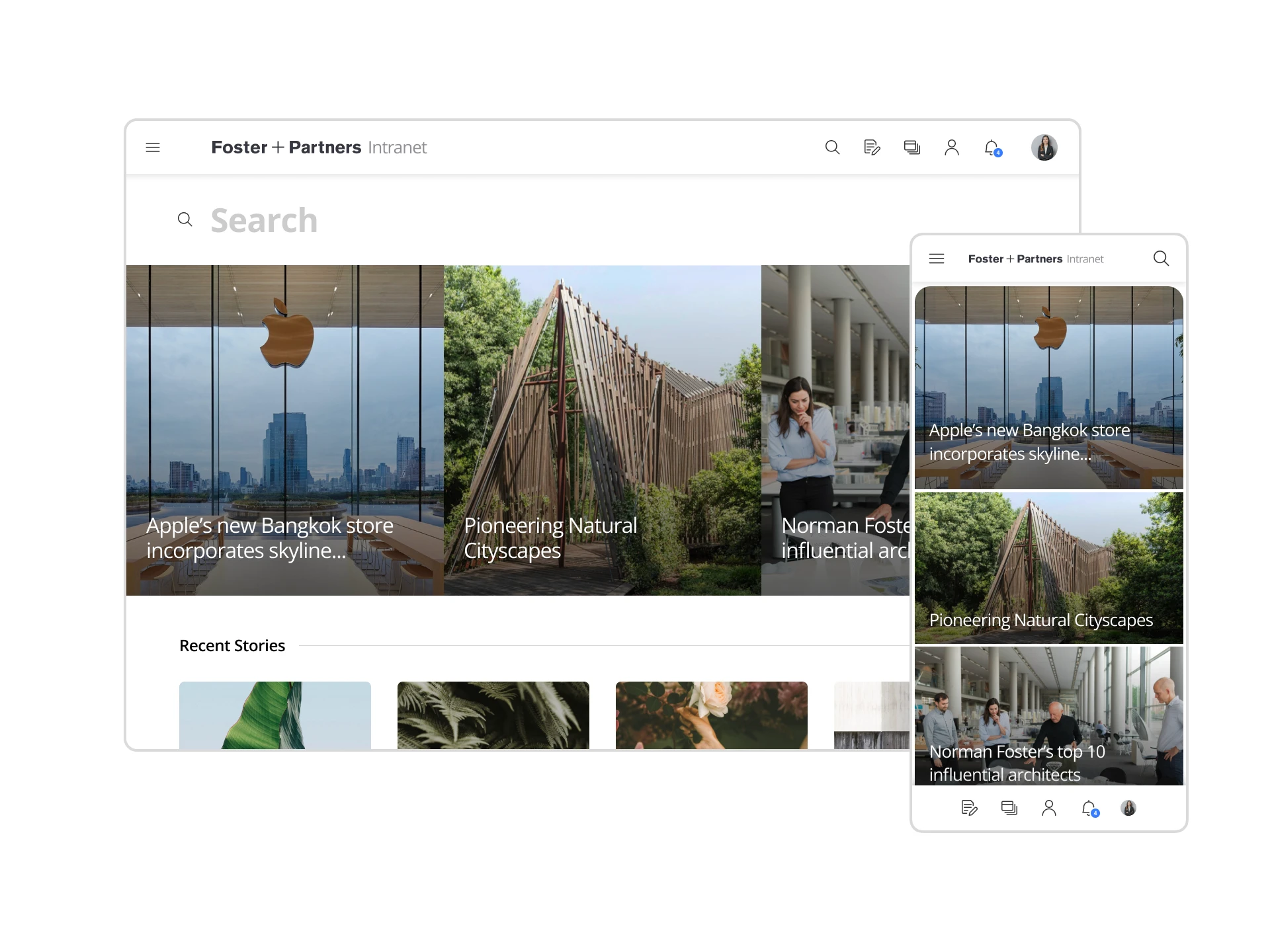
A space worth working in
A firm of 1,500 people across 13 studios does not stay connected by accident. Knowledge gets siloed. Teams in different time zones work in parallel without visibility of each other. News, achievements, and internal resources end up scattered across systems that nobody uses consistently. The ambition was to replace all of that with a single, well-designed digital home: somewhere people would actually want to spend time.
The starting point was understanding how people at Foster + Partners actually work, what they need to find quickly, and what kind of community they wanted to build internally. Every structural and design decision flowed from those conversations rather than from a template.
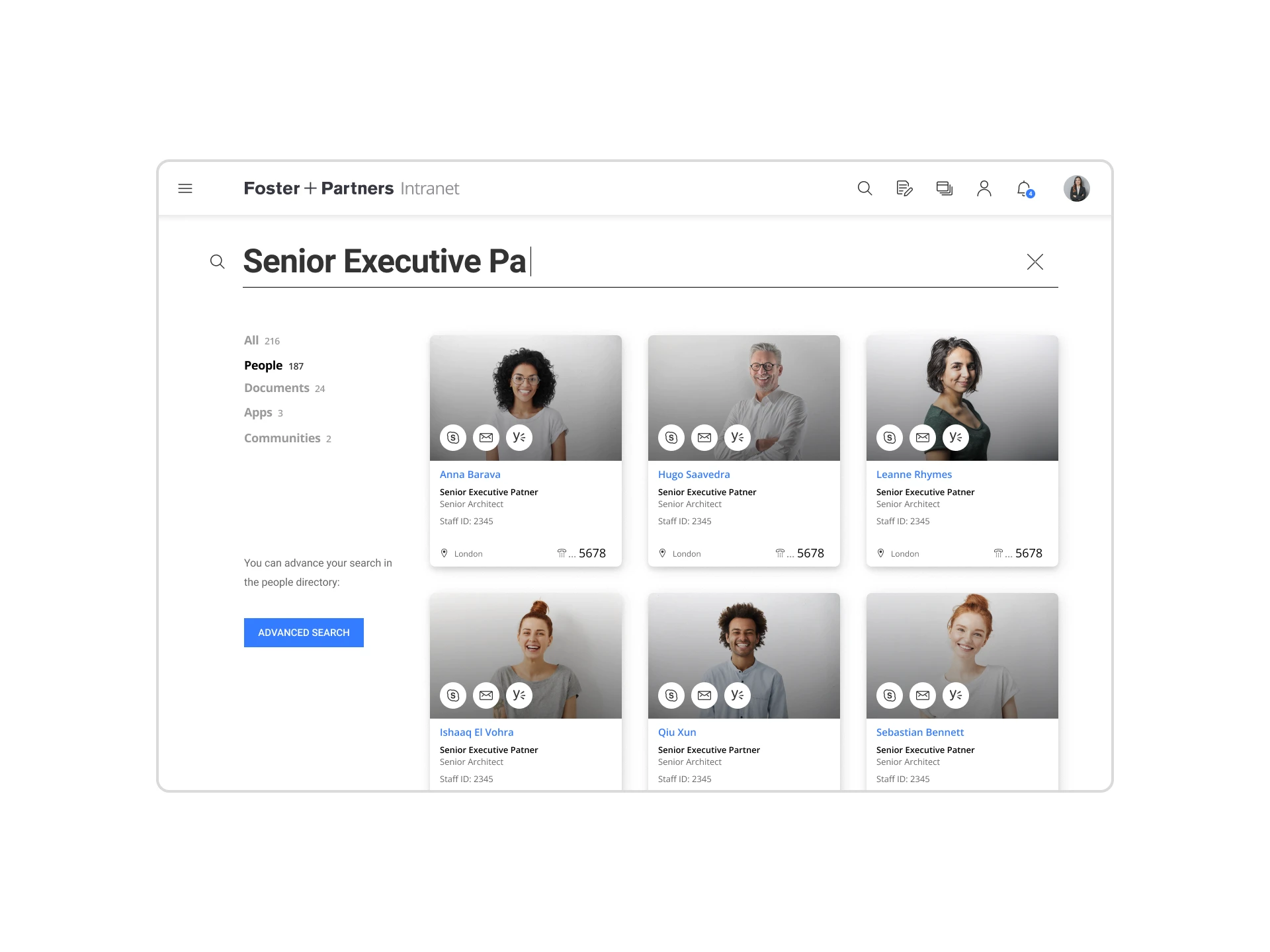
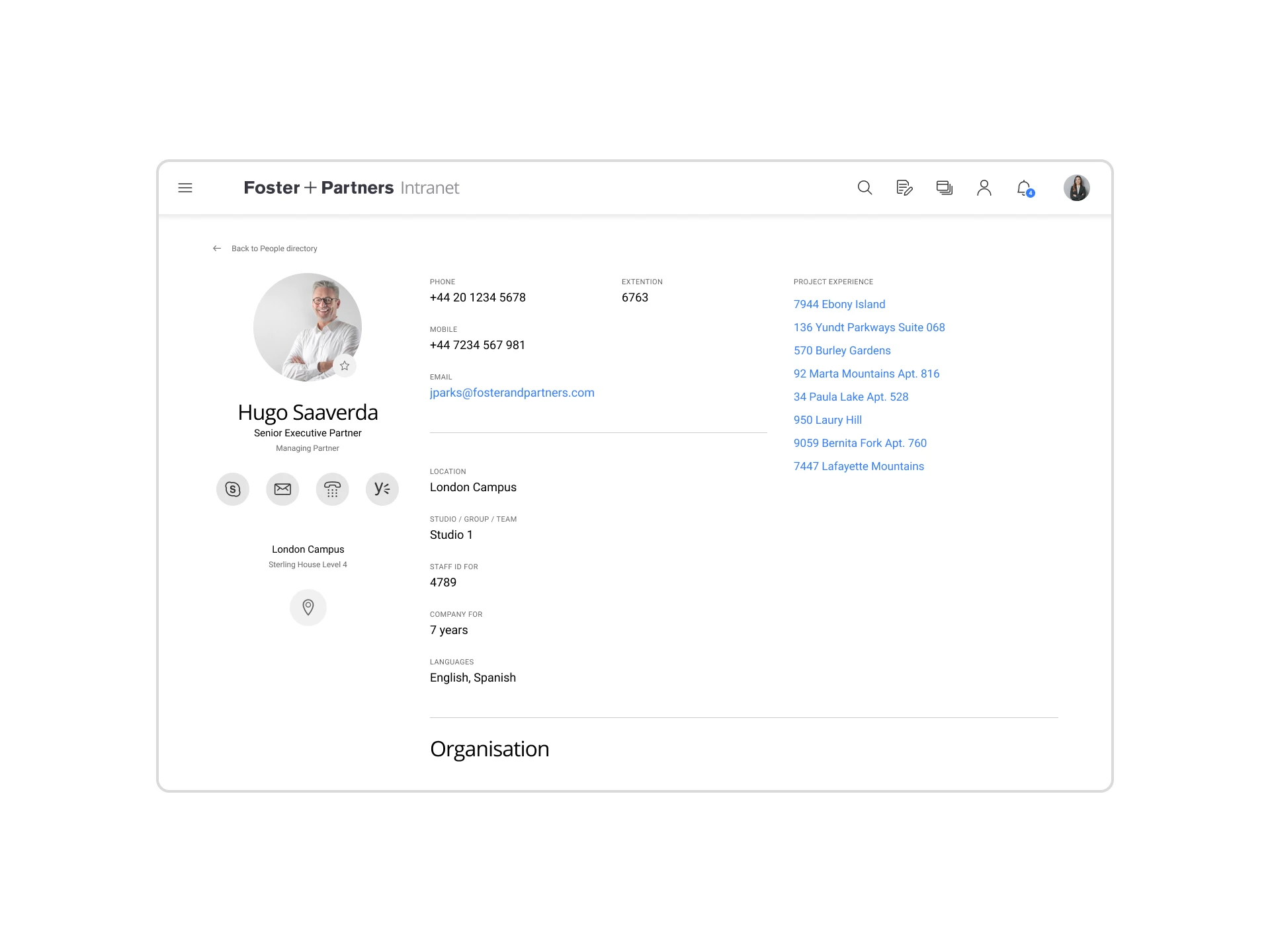
Designed with the firm's own principles in mind
Norman Foster said it takes a great deal of effort for a building to look effortless. That principle shaped everything about the interface. The design draws directly from Material Design's understanding of physical attributes: texture, light, and shadow. The result is a minimalist visual language that feels familiar without being generic, and considered without being cold.
Sophisticated technical capability sits underneath a surface that makes none of its complexity visible. The experience of using the platform is as intuitive as it is quiet - which is exactly how the firm's architecture works, too.
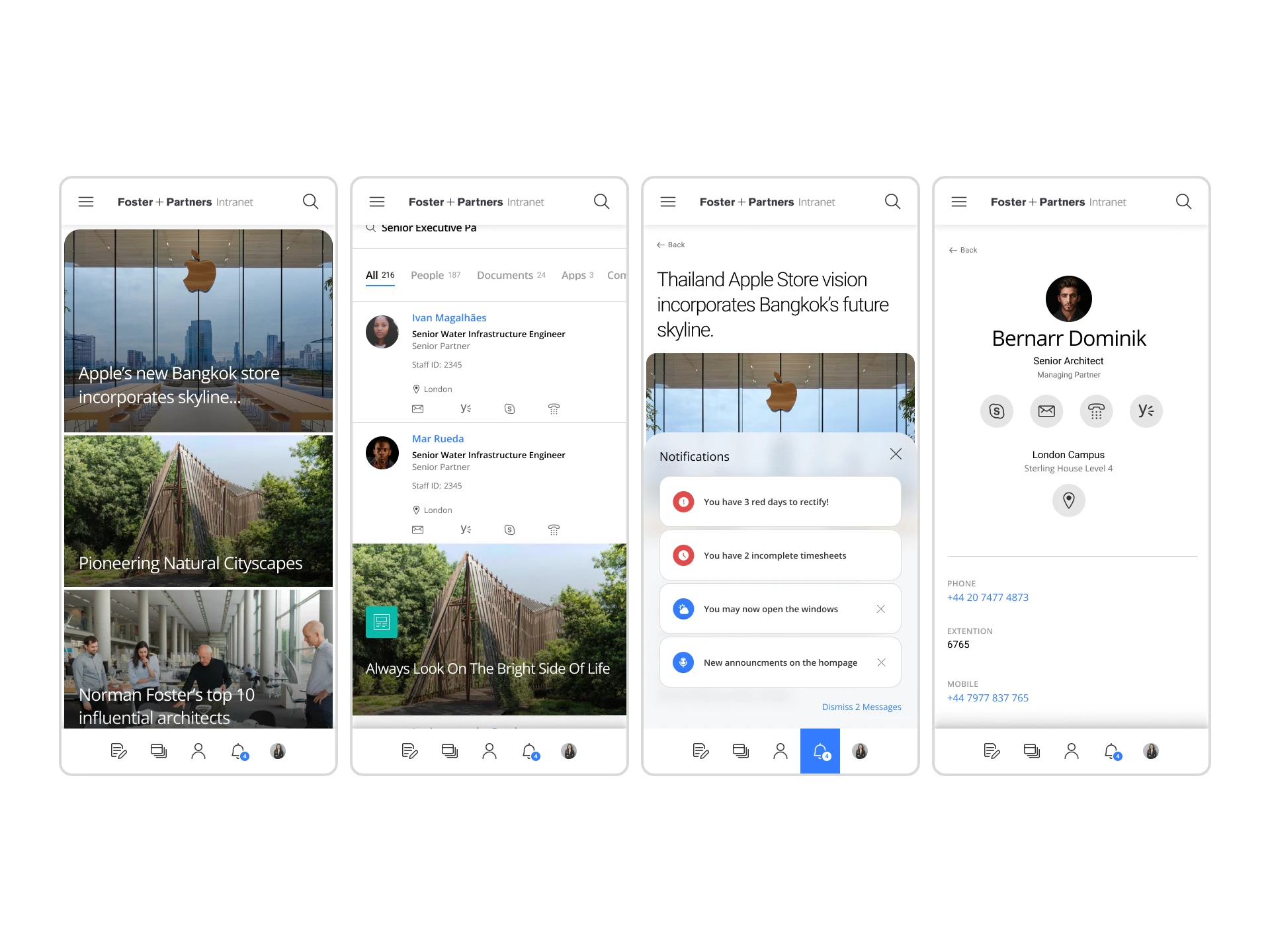
Search that serves a global workforce
With 1,500 people across studios, documents, communities, projects, and news, finding the right thing fast is not a nice-to-have. It is the product. The search capability built on Azure Cognitive Search handles queries across every content type simultaneously: people, documents, applications, news, and communities all surfaced in a single, unified set of results.
In real time, the search orders results by relevance and allows refinement by content type, using facets, A-Z filters, tagging, and pagination. A tool with that much underneath it needs to feel effortless on the surface. And that's the standard we held it to.
Got questions? We’ve got answers. Here’s everything you need to know about projects like this one.
What does ongoing support actually look like once a platform like this is live?
How do you design something that reflects our culture without it feeling like a generic product?
We already have internal tools our teams use. Does everything have to move to one place?
We have staff across multiple countries and time zones. Can a platform like this really serve everyone equally?